Whether inside or outside Brazil, it’s hard to find anyone who hasn’t at least heard of Açaí. Its purplish color and unique flavor have contributed to its international fame, among other qualities typically observed in palms of the same family (the arecaceae family, which includes other fruits such as Juçara, coconut and dendê).
In the Heights
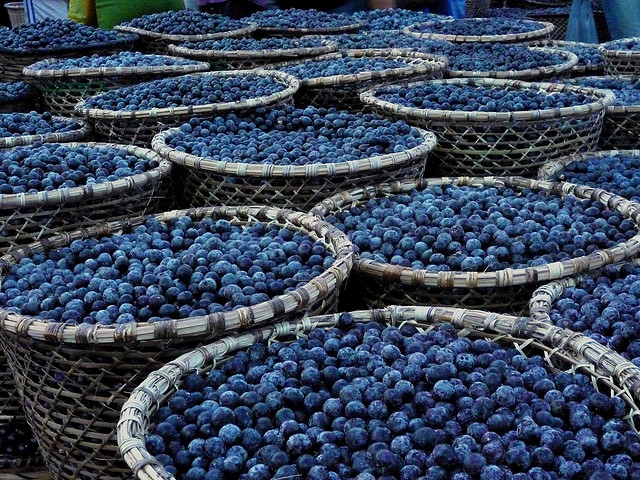
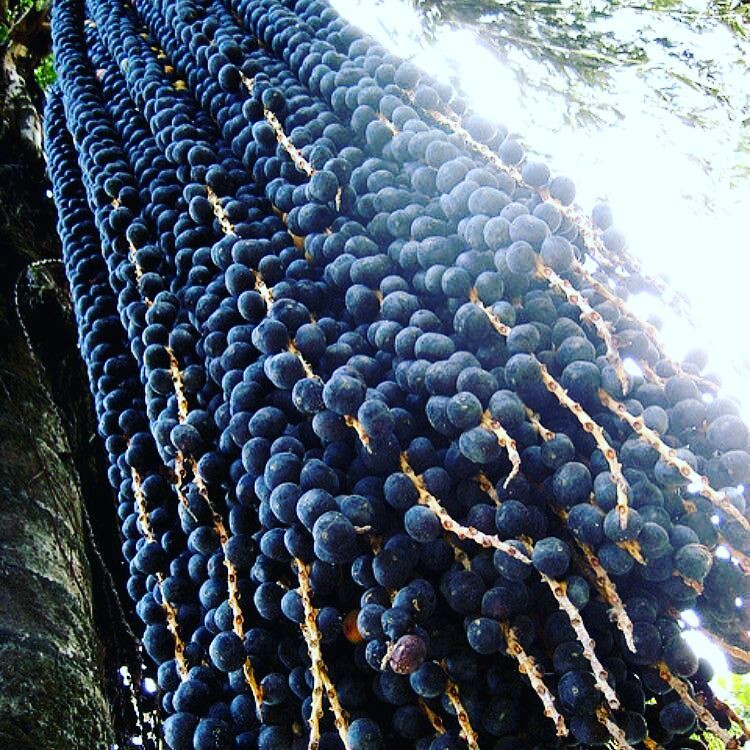
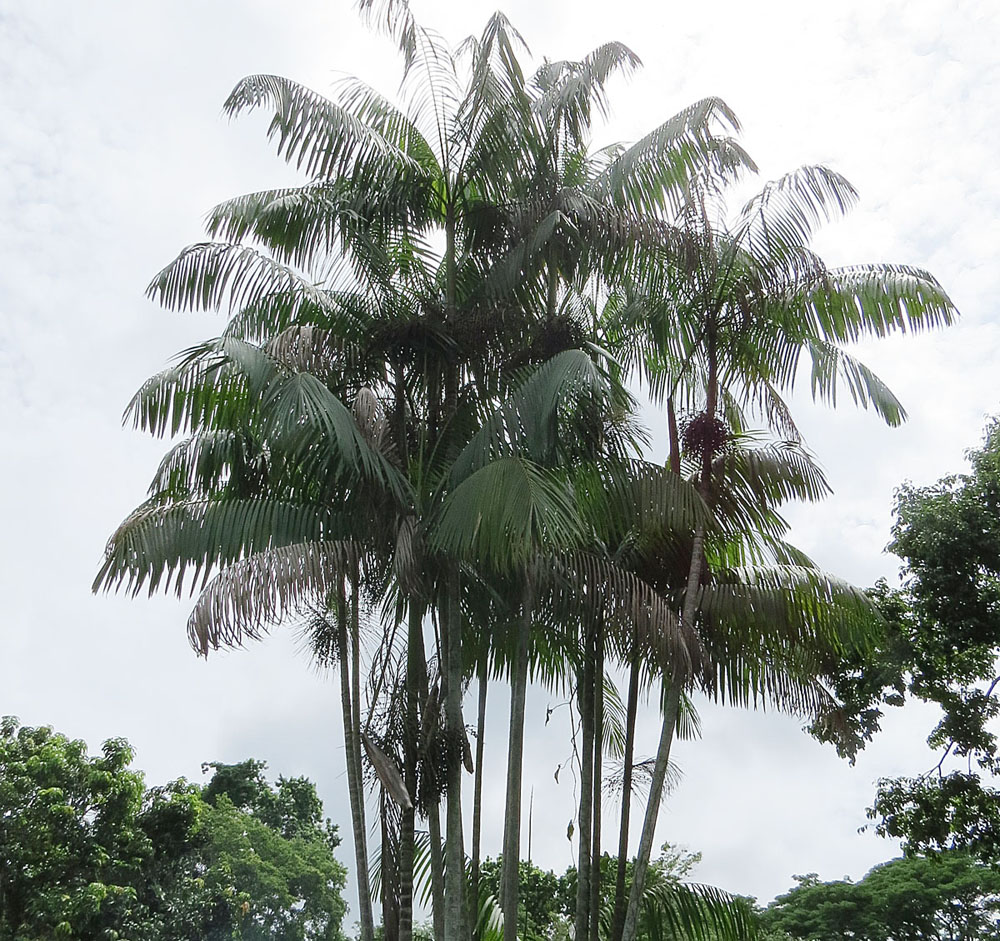
Its tall, slender trunk can reach a height of up to 25 meters (82 feet), where there is a crown of 9 to 15 compound leaves, about 1.2 to 4 meters long. Just below them are the inflorescences in hanging clusters, in shades of white and green, which attract a variety of pollinators, from bees to colorful birds. When ripe, the dense, bursting clusters bear the famous açaí berry, small purple acorns with a thin, rough skin, a soft, acidic pulp and a large, hard stone. It is mainly consumed in the form of pulp, which is beaten with water or milk and traditionally served with manioc flour or tapioca in savory dishes. It can also be used to make juice, ice cream, sweets, cakes, etc.
A superfood
Açaí, considered a superfood, is a fruit rich in nutrients, especially antioxidants, vitamins, fiber, calcium, iron and good fats for our bodies. It has energizing, aphrodisiac and anti-inflammatory properties, which help to improve physical and sexual performance and fight diseases such as colds, flu, infections and anemia. Açaí is also used in the pharmaceutical and cosmetics industries for its health and beauty benefits for skin and hair. These deep purple fruits not only feed the local fauna, but have also sustained human communities for centuries, providing a vital source of food and income.
In fact, in addition to its importance as a food resource, the açaí tree plays a fundamental role in the ecology of the region where it is naturally found, providing habitat for a variety of organisms and contributing to the Amazon’s unique biodiversity. Its resistance to adverse conditions and its ability to thrive in flooded soils make it a vital species for the health of riverside ecosystems.
Treasure of the Forest
From an economic point of view, the açaí palm is a major generator of resources. According to CONAB data, national production was 1.7 million tons in 2020. It currently generates more than US$ 1 billion a year for the Brazilian economy and is a significant source of income for the riverside population, the inhabitants of the banks of the Amazon rivers, mostly cultivated by small cooperatives that help increase the income of families in this region. The global demand for açaí has led to its recognition as a superfood, further increasing its economic value in recent years, becoming one of the most cultivated fruits in the Northeast region of the country.
The state of Pará leads the national production of açaí, supplying around 85% of the country’s total, equivalent to approximately 820,000 tons per year (2018 data). Most of this amount, around 60%, is consumed within the state itself, while 30% is distributed to other regions of Brazil. Only 10% of production is exported abroad, taking the characteristic taste of açaí beyond national borders.
A Gift from Heaven
Even before it was introduced to the Brazilian market (in the 1980s), it already played a very important role among the indigenous peoples who lived and still live in the forests of the Amazon. The protagonist of tales and legends of these peoples, the açaí continues to have a prominent place for these communities.
According to Brazilian indigenous folklore, the açaí came about as a gift from the Gods. The chieftain Itaki had the tribe’s newborn children sacrificed to prevent the famine that was ravaging them because the population was so large and it was difficult to get food for everyone. One day his daughter Iaçã had a baby girl who also had to be sacrificed, according to the chief’s order. Iaçã was deeply saddened by this and spent days and nights crying in mourning inside her oca. She asked Tupã (considered by many indigenous groups to be a supreme deity, Tupã is responsible for controlling the elements of nature and influencing the life cycles of plants, animals and human beings, and is often associated with the fertility of the earth and the protection of indigenous peoples. In many traditions, he is revered and invoked in rituals and ceremonies as a way of seeking his blessing, protection and guidance) to show her father a way to feed his people without having to take the lives of the tribe’s children. one moonlit night, she heard a child’s cry and when she went outside the den, she saw her daughter smiling at the foot of a palm tree. Iaçã ran to hug her, but the child disappeared from her arms. Inconsolate, Iaçã ended up dying hugging that tree. The chief found Iaçã’s body hugging the palm tree, with her eyes turned to its fruit and a smile on her face. Itaki ordered them to harvest the fruit. He made a wine from the pulp that fed the tribe and ordered that there should be no more sacrifices from that day on, naming the fruit açaí in honor of his daughter (Iaçã in reverse). The name açaí comes from the Tupi-Guarani “ïwasa’i”, which means “weeping fruit”.
Attested Importance
In addition to its centuries-old importance in the diet of indigenous peoples, its leaves can be used to make hats, mats, baskets, straw brooms and roofs for houses, and the pest-resistant wood of the trunk for construction. The trunks of the tree can also be processed to produce minerals. Its palm heart is widely exploited as a delicacy, and açaí oil also has various chemical properties that have beneficial effects on the human body. After the pulp has been removed, the cleaned seeds are widely used in the production of handicrafts, further contributing to the financial resources of the people of the Amazon region.
Unfortunately, açaí production in Pará has had an impact on the environment, reducing the diversity of native trees and generating waste. This waste, especially the stones, has been disposed of irregularly, causing problems for the population. However, research has explored ways of using this waste sustainably, such as in the manufacture of prostheses and biodegradable packaging. Local initiatives seek to regularize the collection and proper disposal of this waste, in order to minimize environmental impacts. These efforts highlight the potential of research and innovation to promote sustainability and economic development in the region.
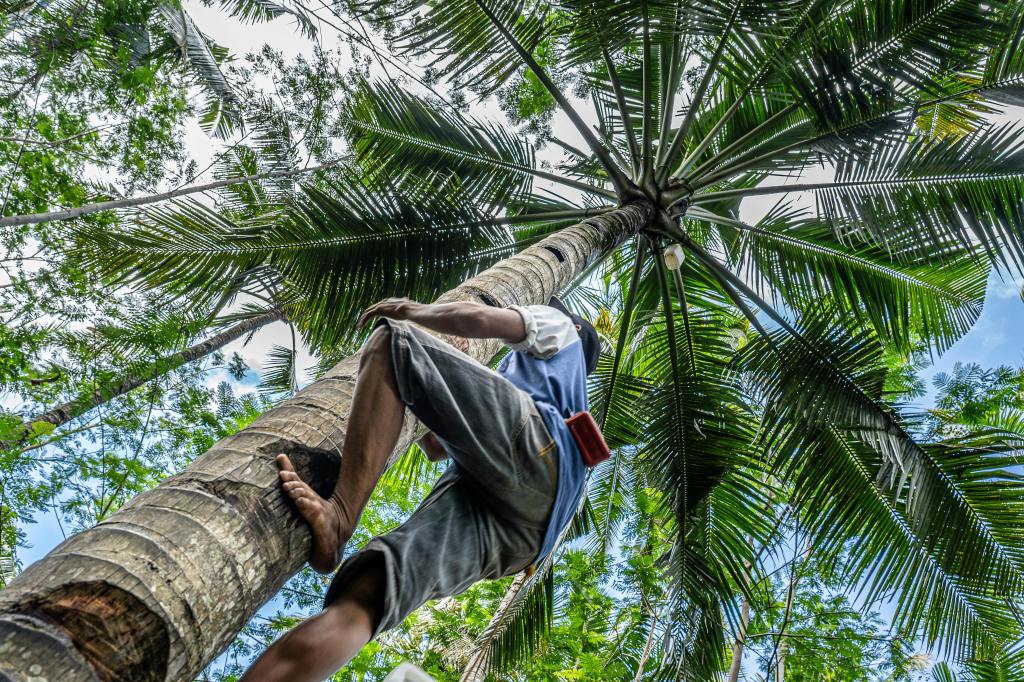
This tree has been a staple in the diet of these peoples for generations and is often associated with health and vitality. Harvesting the açaí berries is a traditional activity that involves climbing the tall palm trees, cutting off the incredibly abundant bunches of fruit and climbing down with them in hand to later pulp the berries.
Whether as a source of income or as a source of food, for local communities or for large international food and cosmetics industries, açaí has become a gateway to discovering the riches behind Brazil’s native trees with all their exuberance, beauty and importance in the most diverse aspects of human life.

 Nftreesbrasil